The Practice Block: One Skill, One Clear Aim
A practice block built around one skill helps you spend less time switching drills and more time noticing what changes from attempt to attempt.
The most common practice mistake is trying to improve three things at once: a tennis serve, a basketball dribble, and a bit of footwork squeezed into one short session. The cost is not simply a rushed workout; it is a blurry memory of what each attempt was meant to teach. A practice block works better when you choose one skill, give it a clear aim, and leave room to notice what happened.
Think of a block as a small appointment with one part of your game. It needs a simple start, a run of attempts, and a brief review—not a catalogue of drills. That structure works in a driveway, at a public court, or during the quiet part of a team practice.
Choose one skill that can be noticed
“Get better at basketball” is too broad for a short block. “Keep the ball close while changing direction” is specific enough to guide your attention. You do not need to solve the whole skill; you need a clear feature to watch while you practice it.
Pick a skill that fits the space and equipment you have. A soccer player in a small yard might work on cushioning a pass with the inside of the foot; a swimmer at an open lane might focus on a relaxed exhale during freestyle. The setting should make the chosen action possible, not force you to improvise a different session halfway through.
- Name one action: receive, turn, release, or change direction.
- Choose one observable feature, such as a balanced finish or a soft first touch.
- Keep the target within your current reach; a skill that is far beyond you can make attempts hard to compare.
- Set aside tempting extras for another day, even if they seem related.
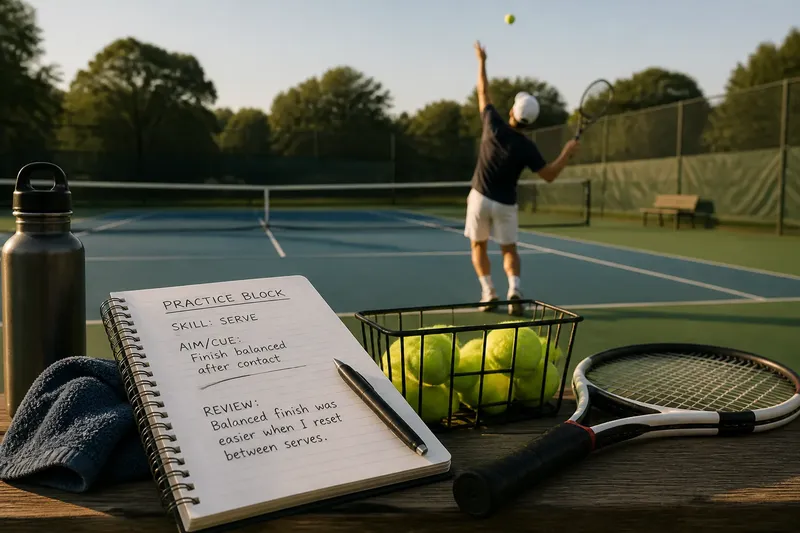
Imagine you have a tennis racket, a few balls, and a quiet section of court. You choose the serve and aim to finish balanced after contact. The expected observable result is not a particular number of successful serves; it is that you can tell whether your landing and follow-through stayed controlled from one attempt to the next.
Write the aim as a cue, not a score
A useful aim tells you where to place your attention. “Serve more accurately” depends on the result of each ball; “keep the tossing arm extended as I begin the swing” points to an action you can notice while serving. A cue can be brief enough to remember between attempts.
Try wording your aim in this form: “During this block, I will pay attention to…” Then finish the sentence with one detail. For a volleyball serve, that might be a steady contact point; for a golf chip, it could be a quiet head through the swing. Keep the cue short. If you need to recite a paragraph before each attempt, it is probably carrying too many ideas.
Choose a cue you can observe without stopping to analyze every movement. A phone video can sometimes help with a visible feature, but it is optional; a teammate’s quick observation or your own feel may be enough. Avoid changing the cue after every imperfect attempt, since a block needs some consistency before you can tell what the practice is showing you.
Begin with a simple entry into the skill
Start with a few easy repetitions that let your body settle into the action. If you are practicing a soccer first touch, roll or gently pass the ball to yourself before asking for a sharper reception. If you are working on a badminton clear, begin with a comfortable feed rather than immediately chasing difficult shots from the back corner.
The entry should resemble the real skill, but be forgiving enough that you can focus on the cue. It is not a separate conditioning routine or a test of how hard you can go. The point is to arrive at the main attempts with the equipment, space, and attention already organized.
Use a visible boundary to keep the start uncomplicated: a line on the court, a cone, a wall target, or a marked patch of grass. A boundary can define where you begin or where the ball should travel. If you are sharing a facility, choose a spot that does not interrupt another player’s activity.
Repeat attempts without turning them into a blur
Give the skill a run of attempts, then pause briefly. The pause is not a verdict on your talent; it is a chance to reconnect with the cue. You might collect the balls, take a breath, and ask, “Did I stay balanced?” before starting the next run.
Keep the task stable while you are learning what the cue feels like. If you switch the target, distance, pace, and technique all at once, it becomes difficult to tell which change affected the attempt. Once the basic action feels familiar, adjust one feature at a time—such as moving a target slightly or asking for a gentler feed—so the block remains about the same skill.
Fatigue and frustration can make repetitions less useful. If you are rushing, losing control of the movement, or repeatedly missing the cue because you are tired, take a longer pause or end the block. Practice is not improved by adding attempts that no longer give you a clear opportunity to focus.
Review the block before moving on
Finish with a short review while the attempts are still fresh. Ask what you noticed, when the cue felt easiest to follow, and what you want to keep the same next time. You can jot one line in a notebook or the Notes app; “balanced finish was easier when I reset between serves” is more useful than “good practice.”
Keep the review descriptive rather than dramatic. One awkward attempt does not mean the skill is broken, and one smooth attempt does not settle the question. Look for a detail you can carry into another block, such as a reliable starting position or a moment when your attention drifted.
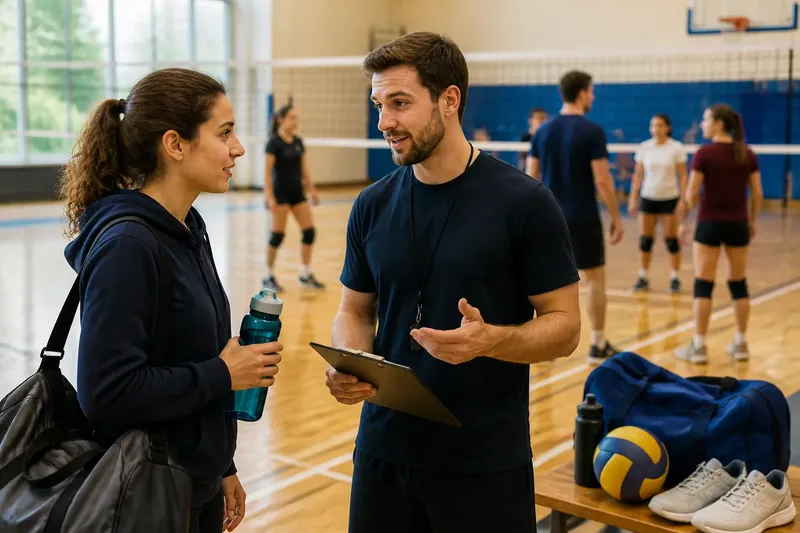
If you train with a coach, teammate, or family member, ask for one observation about the cue you chose. Make the request specific: “Could you watch whether I stay balanced after the kick?” is easier to answer than “Was that better?” The other person can offer a useful outside view without turning your brief practice into a full evaluation.
Which choices make a practice block easier to use?
How long should a practice block be?
Keep it short enough that you can stay attentive to one cue, and stop when the repetitions become rushed or sloppy. The right length depends on the skill, your energy, and the conditions; it is not a contest to fill every available minute.
Should I practice alone or with a partner?
Either can work if the person or setup supports the chosen action. A wall, rebound net, or self-feed suits some skills, while a partner can provide a moving pass or a quick observation; choose the arrangement that keeps the skill recognizable.
What if I keep missing the cue?
Make the task simpler before adding more reminders. Reduce the speed, use an easier feed, or return to a closer target, then check whether the cue becomes easier to notice.
When should I change the aim?
Change it after you have had enough attempts to understand the current cue, or when the cue no longer fits the task. If you are unsure, keep the next block the same and make one small adjustment rather than replacing the entire plan.
Make the next block easier to start
End by leaving yourself a useful starting point for another day. Put the ball basket near the court gate, note the cue on a scrap of paper, or save a short reminder in your phone. A small setup detail can spare you from arriving and spending the first part of practice deciding what to do.
That note should name the skill and one observation, not prescribe a rigid routine. “Basketball: close control while changing direction; notice whether the ball stays within reach” gives you a place to begin while leaving room to adapt to the floor, the available space, and how you feel. The practice block stays focused, but it does not have to be identical every time.