What the Label on a Sports Shoe Can and Cannot Tell You
A sports shoe label can narrow your search, but checking its surface, construction, and fit claims helps you choose a pair suited to your activity.
The common mistake with a sports shoe label is treating “running” or “training” as a promise that the shoe will suit your feet and every session. That shortcut can leave you with a pair that feels wrong for your activity, even if the box sounds right. Read the label as a starting clue, then compare its stated purpose with the shoe’s shape, materials, and your fit needs.
A sports shoe label describes intended use, not personal fit
Brands use activity labels to group shoes for shoppers. A court shoe, for instance, is generally designed with court movement in mind, while a trail-running shoe is marketed for uneven outdoor surfaces. These labels can narrow the choices, but they do not tell you how the shoe will feel or whether its design suits your exact sport.
Even within one category, models can differ in stiffness, cushioning, sole pattern, upper material, and shape. A shoe labeled for training might suit controlled gym exercises but feel awkward for a player making quick lateral movements. The activity name is a clue to the design brief, not a verdict on your needs.
Ask what the label appears to address: the surface, type of movement, or activity itself. If the wording is broad, look for a more specific description on the manufacturer’s product page or packaging. An activity name gives useful context, but not a complete account of how the shoe behaves.
Activity names point to design priorities
Different activities put different demands on footwear. Running shoes often emphasize forward movement and cushioning, while many court shoes are shaped for movement in multiple directions. A hiking shoe may prioritize a protective build and a sole intended for outdoor terrain. These are common design aims, not rules that every product follows.
Look for the surface named in the description. “Indoor court” and “outdoor court” can imply different outsole materials or patterns; “road” and “trail” can point to different tread designs. If you play on a school gym floor, a tennis court, or a mixed-use recreation surface, the intended setting may matter as much as the sport name.
Also consider what you actually do during a session. Someone attending a casual fitness class with brief movement and plenty of pauses may have different needs from someone doing repeated jumps or sharp direction changes. The shoe label cannot account for your pace, movement habits, or surface conditions.
Fit descriptions make sense when you know what they mean
Words such as “wide,” “roomy,” “narrow,” and “snug” can help set expectations, but brands do not always use them in identical ways. A roomy toe box does not necessarily mean a wide heel, and a shoe described as supportive may still press on a particular part of your foot. Treat fit language as a prompt to inspect the shape, not a substitute for trying the shoe on.
Notice where a description locates its fit claim. “Extra room in the forefoot” says more than a general claim of comfort because it identifies an area. If you need a broad fit throughout the shoe, check whether the model is offered in a width option rather than assuming a roomy front solves every fit concern.
Try shoes with the socks you expect to wear for the activity, and pay attention to pressure, heel movement, and toe space while standing and walking. A shoe that feels secure should not depend on painfully tight lacing. If you use orthotics or have a persistent foot concern, a qualified footwear specialist or health professional can help assess the fit.
Construction details reveal more than marketing adjectives
Once the activity and fit descriptions have narrowed the options, inspect what the shoe is made to do. The outsole is the part that meets the ground; its pattern and rubber placement can indicate whether the shoe is intended for a smooth indoor surface, outdoor paths, or another setting. A deep tread may be useful on loose ground but feel intrusive on a polished gym floor.
The upper is the material that wraps around the foot. Mesh can allow more airflow, while overlays or denser panels may add structure in selected areas. Neither material is automatically better: ask whether the construction seems suited to the movement and conditions you expect.
Look at the midsole, the layer between the upper and outsole, for clues about cushioning and firmness. Product descriptions may use terms such as “responsive” or “stable,” but these are not standardized measures. If possible, compare how the shoe bends and how its base feels underfoot; follow any activity-specific requirements set by your club, coach, or facility.
Compare label claims with your actual use
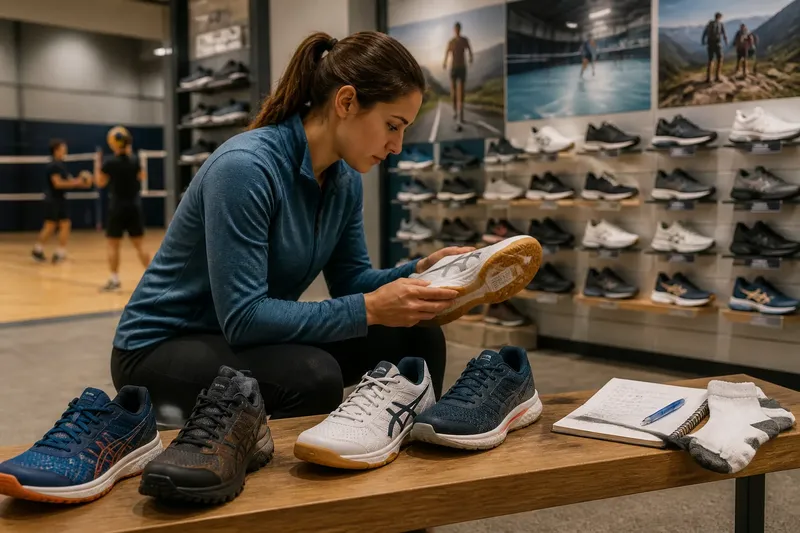
Say you attend an indoor volleyball session and are choosing between a general training shoe and one labeled for indoor court sports. You check whether each product description names indoor use, inspect the outsole for a pattern intended for court contact, and try both on with your usual socks. If one feels more secure and comfortable during the movements you expect, that is useful information about fit; it does not promise better play.
Use this comparison to turn product claims into decisions:
- Activity: Check whether the label names your sport, a related activity, or only general exercise. If it names your activity or a close match, keep it on your shortlist; if it is vague, check the manufacturer’s detailed description before deciding.
- Surface: Check whether the stated setting matches your court, floor, path, or field. If it matches, continue comparing; if it does not, choose a model described for your surface instead.
- Movement: Check whether the description and construction suit forward travel, side-to-side movement, or a mix. If they match your session, consider the shoe; if they do not, look for a design intended for your movement pattern.
- Fit: Check whether width and shape details address the areas where you need room or support. If the description is specific and the shoe feels comfortable when tried on, keep considering it; if pressure or slipping remains, try another fit or model.
- Outsole: Check the product’s stated surface and compare it with the visible tread pattern. If both point to your playing area, keep the option; if they conflict or remain unclear, consult the manufacturer or choose a more clearly described surface match.
- Materials: Check the upper and cushioning descriptions against the conditions and feel you prefer. If they seem appropriate, compare the shoe in person when possible; if they do not, consider another construction.
This comparison keeps the decision grounded in observable details rather than the confidence of a product name. If two options still seem equally plausible, walking in them can tell you more about fit than another round of reading promotional language.
What do sports shoe labels leave unanswered?
Does “cross-training” mean one shoe works for every sport?
No. It signals a broad training purpose, but a shoe designed for gym sessions may not match a particular sport’s surface or movement demands. Check the construction and any rules or recommendations for your activity.
Does a “wide” label mean the whole shoe is wider?
Not necessarily. Fit terms can refer to particular parts of the shoe, and sizing conventions vary by brand. Look for an explicit width option and try the shoe on if you can.
Can the outsole tell me where to use the shoe?
It can offer clues through its material and tread pattern, but appearance alone does not establish suitability. Compare the product’s stated surface with your playing area and follow facility guidance where relevant.
What should I do if the label and my fit disagree?
Do not ignore discomfort just because the activity name seems appropriate. Consider another model or fit option, and seek advice from a qualified footwear specialist if you have ongoing pain or a specific foot concern.
Use the label as a filter, then let fit decide
A sports shoe label is most helpful when it narrows your search to plausible designs. It can point toward an activity, surface, fit intention, or construction feature; it cannot account for every variation in your movement, foot shape, or comfort. The more specific the claim, the easier it is to compare with what you will actually do.
When you shop, keep the sports shoe label in view but give equal attention to the outsole, upper, midsole, and fit description. Check manufacturer instructions and any relevant club or facility requirements when they determine what is appropriate. A label can guide your shortlist; the final choice should make sense for your activity and feel acceptable on your own feet.